50/30/20 Rule vs Envelope Budgeting: Which One Actually Works?
I ran both systems simultaneously for six months — tracking every coffee, every car repair, every impulse Amazon order — and the results surprised me. Not because one method was dramatically better, but because the right choice turned out to depend entirely on one specific thing about how I actually spend money day-to-day.
What the 50/30/20 Rule Actually Means (And Who It's Built For)
The 50/30/20 rule divides your after-tax income into three buckets: 50% for needs, 30% for wants, and 20% for savings and debt repayment. That's it. No 47 sub-categories, no tracking whether you spent $12.80 or $13.40 on lunch. The appeal is the simplicity — you run a rough tally at the end of the month, see if you're roughly in range, and move on.
The rule was popularized by Senator Elizabeth Warren and her daughter Amelia Warren Tyagi in their 2005 book All Your Worth. The core idea was to shift Americans away from complicated line-item budgets toward a sustainable ratio they could actually maintain long-term. For people with steady salaries, moderate expenses, and a general discomfort with spreadsheets, it genuinely works as a first-pass system.
The catch is in the word "needs." Rent, groceries, utilities, and minimum debt payments all live in that 50% bucket — but so does your gym membership if you genuinely use it for health, your internet subscription, and your car payment. That bucket fills up fast. If you earn a median household income in a high cost-of-living city, your "needs" alone might eat 65% of take-home pay, which means the whole framework quietly breaks before you've started.
How Envelope Budgeting Works in Practice
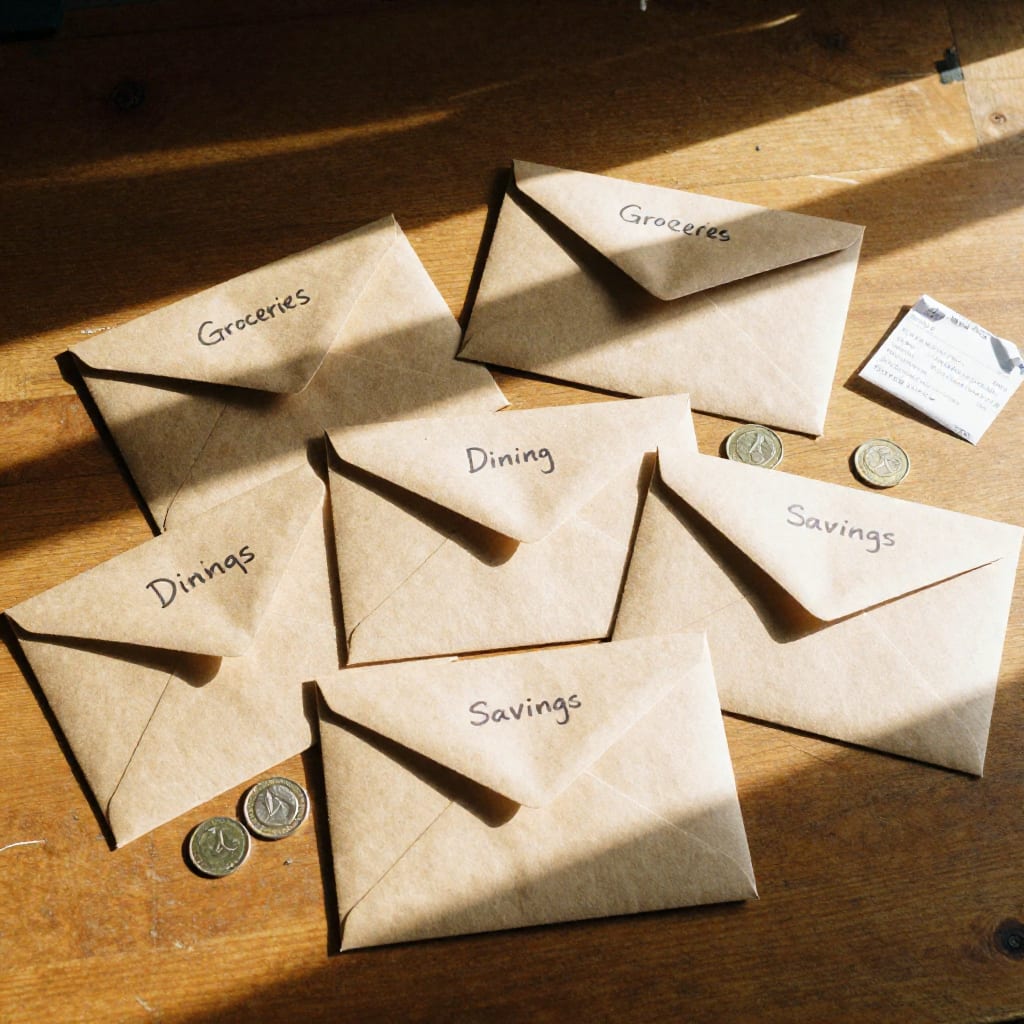
Envelope budgeting is older and more hands-on. Traditionally you'd divide your cash paycheck into labeled envelopes — one for groceries, one for gas, one for dining out — and when the envelope is empty, the spending stops. No envelope-borrowing allowed.
Digital versions have made this much more practical. Apps like YNAB (You Need A Budget) and Goodbudget replicate the logic: you assign every dollar to a virtual category at the start of the month, and the app tracks your running balance in real time. The friction is intentional. Every purchase requires a conscious decision about which category it comes from, which is either annoying or therapeutic depending on your personality.
Envelope budgeting tends to attract people who've already tried looser systems and found them too forgiving. If you've ever looked at your bank balance on the 27th and thought "where did it all go," the envelope method answers that question with brutal precision. It also works well for specific goals — paying down a car loan, saving for a vacation — because you can create a dedicated envelope and watch it grow (or shrink) in real time.
Side-by-Side Comparison: Flexibility vs. Control
Here's where the two systems genuinely diverge. The 50/30/20 rule trades precision for ease. You're making broad percentage allocations, not line-item decisions. That means a single bad restaurant month won't derail you if your overall "wants" spending stays under 30%. It also means a pattern of small overspends can quietly compound for months without triggering any alarm.
Envelope budgeting inverts that trade-off. It's high-friction by design. You know within about $8 whether your grocery envelope is close to empty. That precision is genuinely powerful for behavior change, but it also demands consistent bookkeeping. Miss a few entries and the system loses its integrity entirely — a half-updated envelope is worse than no envelope because it creates false confidence.
- Setup time: 50/30/20 takes about 30 minutes to start; envelope budgeting needs 1-2 hours to define all categories carefully.
- Monthly maintenance: 50/30/20 requires one end-of-month review; envelopes require logging every transaction, ideally same-day.
- Forgiveness for mistakes: 50/30/20 absorbs single-category overspends across a broad bucket; envelopes require active rebalancing.
- Visibility: Envelopes give category-level clarity in real time; 50/30/20 gives a high-altitude view monthly.
My honest take: the 50/30/20 rule is a philosophy more than a budget. It sets a sustainable direction. Envelope budgeting is an operational system that actually controls behavior. Neither is universally superior — but confusing the two leads to frustration.
My Six-Month Test: What the Numbers Showed
Starting in January 2026, I tracked every transaction under both frameworks simultaneously. My take-home at the time was roughly $4,200 per month after taxes. Under 50/30/20, that meant $2,100 for needs, $1,260 for wants, and $840 for savings and debt.
Month one under the percentage system: I came in at 51% needs, 28% wants, and 21% savings. Technically fine. But buried in that "wants" number was $340 in dining out — nearly a third of my wants budget on restaurants alone. The aggregate looked healthy, so I didn't notice until I ran category breakdowns in February.
When I switched my "wants" allocation into four envelopes — restaurants ($180), entertainment ($120), clothing ($80), personal care ($60) — the restaurant problem became visible within two weeks. By February 14th, my dining envelope was at $22. I cooked at home for the last two weeks of the month, which I would never have done under the percentage-only view.
By month three, my restaurant spending had settled to around $140 per month without much conscious effort. The envelope did the work. But I also noticed I was spending mental energy on categories that barely mattered — my personal care envelope ($60) usually had $40 left at month's end, and tracking every shampoo purchase added friction with no behavioral payoff. That's the insight that changed how I think about these systems: envelope budgeting is most valuable exactly where your spending is undisciplined, and overkill everywhere else.
Where Each Method Breaks Down
The 50/30/20 rule struggles most with irregular income. If you're a freelancer or contractor, your monthly take-home varies, which means your 50% cap on needs is a moving target. A $2,000 month and a $5,500 month require completely different absolute dollar amounts. Percentage thinking works when the base is stable; it gets confusing fast when it isn't.
It also has a lifestyle inflation blind spot. As incomes rise, the 30% "wants" bucket grows in dollar terms automatically. Someone earning $3,000 a month has $900 for wants; earning $7,000, that's $2,100. The percentage stays the same while the absolute spending climbs steadily. This is fine in moderation, but it means the rule provides no natural brake on spending creep over time.
Envelope budgeting has its own failure mode: category overload. I've seen people set up 30+ envelopes — separate ones for "coffee", "alcohol", "snacks" — and collapse the system under administrative weight within six weeks. The optimal number of envelopes is probably somewhere between 8 and 15 categories. Fewer than 8 and you lose the granularity that makes it useful; more than 15 and the tracking burden exceeds the behavioral benefit.
There's also a cash flow timing problem. Envelope budgeting assumes you allocate all your money at the start of the month. But if your rent is due on the 1st and your paycheck arrives on the 5th, you're either pre-funding from savings or the system gets awkward. Apps like YNAB handle this reasonably well, but it's worth knowing the friction exists.

How to Choose the Right Method for Your Situation
Three questions cut through most of the noise:
- Do you know where your money goes? If you can roughly account for your spending without checking statements, the 50/30/20 rule is probably enough — you're already reasonably disciplined. If you regularly finish the month baffled, envelopes will teach you something.
- Is your income stable? Salaried employees get more from the 50/30/20 rule's simplicity. Freelancers, gig workers, or anyone with variable income should default to envelope budgeting, where you allocate what you actually have this month rather than projecting from a percentage.
- Do you have a specific spending category that causes you consistent problems? You don't have to adopt envelope budgeting wholesale. A hybrid works well: use 50/30/20 for overall allocation, then create 3-5 envelopes only for the categories where you tend to overspend. You get targeted control without administrative overload.
This is general information about personal finance approaches, not professional financial advice — your specific income, debts, and goals will determine what works for your household, and a certified financial planner can help tailor a strategy to your situation.
Worth bookmarking this before your next salary review or budget reset — the system that's right at $40,000 a year often isn't the same one that's right at $80,000, and it's worth revisiting the question as your financial picture changes. You can also explore zero-based budgeting vs 50/30/20 for beginners as a third option if neither method clicks, or read up on how to budget with irregular freelance income if your monthly earnings vary significantly.
Frequently Asked Questions
Can I combine the 50/30/20 rule with envelope budgeting?
Absolutely. Use 50/30/20 to set the big-picture percentages, then build envelopes within the "wants" or "needs" bucket for the sub-categories where you need granular control. This hybrid approach handles both the philosophy and the operational problem.
Is envelope budgeting only for people who use cash?
No. Digital apps replicate the logic entirely without physical cash. The point is the category cap, not the medium. Most people using the envelope method today do it digitally, according to the general consensus among consumer budgeting research and personal finance communities.
Which method is better for paying off debt?
Envelope budgeting tends to win here. Allocating a specific debt-repayment envelope — and feeling it drain as you make payments — creates the kind of visceral feedback that motivates sustained behavior change. The 50/30/20 rule lumps savings and debt repayment together in the 20% bucket, which can dilute the focus.
How long should I try a new budgeting method before switching?
Give it a minimum of three full calendar months. The first month involves setup friction and learning curves. The second month reveals your real patterns. By month three, you'll have a clear sense of whether the system fits your habits or fights them.