How to Recover from a Tank Slapper or Speed Wobble on a Scooter
Imagine cruising down the highway when suddenly your handlebars start shaking violently. Your heart races. Do you know what to do? This guide walks you through the life-saving steps to recover from a speed wobble on a scooter.
Caught in a Wobble: The First Seconds Matter
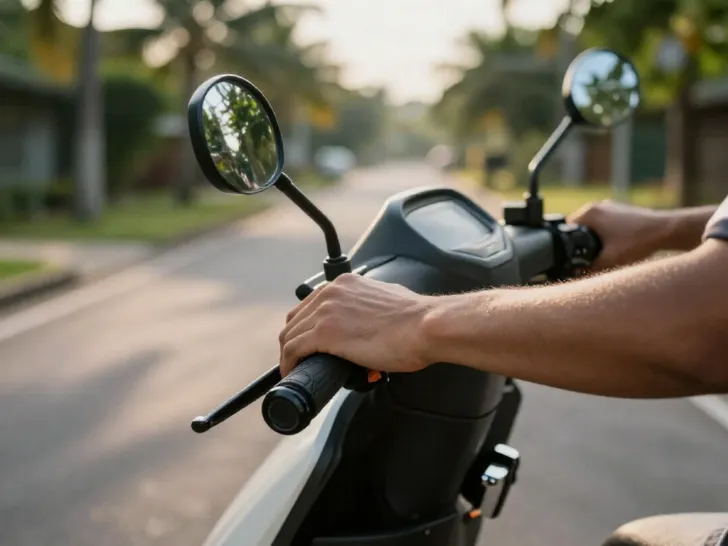
When the handlebars suddenly jerk violently from side to side, the scooter’s front wheel slapping the pavement like a jackhammer, your only lifeline is to instantly go loose. A rigid, panicked grip transmits every jolt into the frame and intensifies the wobble. Instead, relax your arms completely and smoothly roll off the throttle. The chassis settles on its own as speed drops. Fighting the bars or grabbing the brake will only make it worse—but letting them twitch and easing off the gas ends the terror in seconds.
What Is a Tank Slapper on a Scooter?
A tank slapper on a scooter is a rapid, side-to-side oscillation of the front wheel and handlebars, usually triggered at higher speeds when the front suspension loses stability and sends violent shaking through the steering.
Why Scooters Get the Wobbles
Most Malaysian scooters—think Yamaha Ego, Honda Beat, or Modenas Karisma—ride on 10- to 12-inch wheels and a step-through frame that lacks the torsional stiffness of a traditional motorcycle. This design naturally pushes the centre of mass to the rear, especially with a pillion on board. When the front tyre hits a bump or road irregularity, the light contact patch can’t damp the oscillation, and loose steering head bearings or low tyre pressure turn a shimmy into a full tank-slapper. It’s a mechanical mismatch that heavier bikes just don’t suffer—a reminder that scooter stability is more finicky than it looks.
The Recovery Technique: Step by Step
The moment a speed wobble starts, everything in your riding instincts screams to clamp down and fight the bars—that reaction is exactly what prolongs the shake. Instead, consciously loosen your grip until your palms just cradle the grips. A death grip transfers every twitch from your arms into the steering head, amplifying the oscillation. Think of it as letting the scooter's own castor effect find its way, rather than forcing it.
Keep your feet planted on the floorboard. This is non‑negotiable on a scooter. Dabbing a foot at speed does nothing to stabilise a wobble and can actually pull the chassis more off‑balance. Your lower body's job is to stay still and let the scooter move beneath you. At the same time, actively shift your weight forward by leaning your chest toward the handlebar. This small movement transfers mass onto the front wheel, which increases the tyre's contact patch and damps the oscillation. It's the opposite of leaning back in fear.
Throttle control is the linchpin. Smoothly roll the throttle toward the closed position—do not snap it shut. Chopping the throttle suddenly transfers weight rearward and can make the front end go even lighter, feeding the wobble. Imagine you're slowly turning down a volume knob. The engine braking on most automatic scooters will gently decelerate, and as speed drops, the wobble naturally fades. Avoid the temptation to grab the brakes, because hard braking forces the front suspension to compress and can trigger a fresh oscillation. If you absolutely must shed speed faster, a feather‑light application of the rear brake can help, but only after the worst of the shaking has subsided.
Throughout the whole episode, fix your vision far down the road. Looking at the ground or the wobbling front wheel makes your body tense and disrupts your balance. Pick a point in the distance and ride toward it. Your body will follow your eyes, and that relaxed target focus helps your arms stay loose. Once the bars settle, maintain light pressure on the grips, keep your weight forward, and gently open the throttle again only when you're sure the wobble has fully stopped. Practicing this sequence mentally—loosen, feet down, lean forward, roll off, look ahead—means you won't have to think when it actually happens.
What NOT to Do: Common Rider Errors
Panic is the real enemy when your front end starts shuddering. The natural instinct is to clamp down hard on the grips, but a death grip transfers every oscillation straight into your arms and upper body, amplifying the shake instead of dampening it. Keep your hold firm but relaxed—let the bars move within your loose clasp.
Slamming on the brakes, especially the front, is equally dangerous. Hard braking shifts weight forward, unloading the rear and compressing the front suspension, which can actually tighten the wobble into a full-blown tank slapper. Instead, roll off the throttle gently and allow engine braking to slow you gradually. Aggressive steering inputs only add energy to the oscillation. Trying to steer out of a wobble by jerking the bars left or right will make the bike more unstable; the best steering input is almost none at all.
Chopping the throttle shut abruptly is another common mistake with alarming consequences. When you snap the throttle closed, the sudden deceleration can cause the rear tire to lose traction momentarily, compounding the instability. The correct move is to ease off the throttle incrementally while keeping your eyes up and your body as still as possible. Remember, a speed wobble feeds on rider input—the less you do, the faster it settles.
After the Shake: Check Your Scooter
Once you've regained control, don't just keep riding—find a safe spot to pull over immediately. A tank slapper can loosen axle nuts, shift handlebar mounts, or knock your steering head bearings out of adjustment. Check that both wheels spin freely without wobble, squeeze the front brake and rock the bike to feel for play in the steering, and give your tires a quick press to make sure they haven't lost pressure. If you were carrying a heavy load on the rear rack or had an unevenly packed top box, that could have been the trigger, so redistribute weight before you set off again.
Preventing Future Speed Wobbles
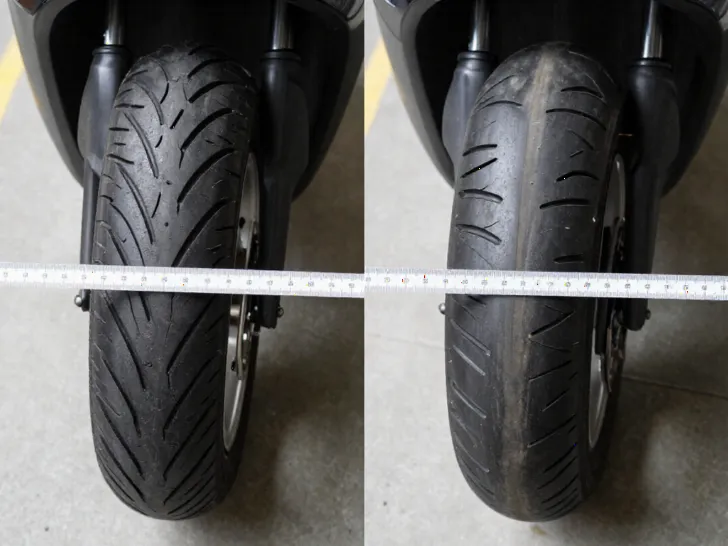
Prevention beats any recovery technique. The most effective step is maintaining correct tire pressure and checking tread depth. In Malaysia's heat, pressures fluctuate; check them at least weekly when the tires are cold. Even slight underinflation can destabilise the front end, while worn tread channels rainwater poorly, making wobbles more likely on wet roads. Also inspect your steering head bearings for looseness or notchiness—if the bars catch or click when turning lock-to-lock, get them serviced.
Suspension health is equally critical. Blown fork seals or a soft rear shock can upset the chassis, so look for oil leaks and correct preload settings. But the simplest prevention is proper loading. Avoid overstuffing a rear top box or hanging heavy bags off the back. Excess weight behind the rear axle lightens the front wheel, dramatically reducing stability. Distribute weight evenly and keep heavy items low. For older scooters that regularly cruise at expressway speeds, a bolt-on steering damper is a pragmatic addition. It won't fix a mechanical fault, but it can suppress sudden oscillations and add a reassuring safety net.
FAQ
Can a speed wobble cause a crash?
Yes, a speed wobble can cause a crash if the rider panics or applies sudden braking. The violent handlebar oscillation can throw off balance and lead to a loss of control. To reduce risk, gently roll off the throttle and keep a relaxed grip until the wobble subsides.
Are scooters more dangerous than motorcycles in this regard?
Scooters are not inherently more dangerous than motorcycles when it comes to speed wobbles. Both can experience them due to similar factors like tire wear, steering bearing condition, or load distribution. Scooters often have smaller wheels and different weight distribution, which may make them slightly more sensitive to certain road imperfections, but proper maintenance keeps the risk low.
Do I need a steering damper on my scooter?
Most scooter riders do not need a steering damper for everyday commuting. Factory setups are designed to be stable at legal speeds on typical Malaysian roads. If you frequently ride at higher speeds or carry heavy luggage, a damper might offer extra peace of mind, but it is not a necessity for the average rider.
What if the wobble happens while cornering?
If a wobble occurs mid-corner, immediately reduce your lean angle by gently steering the scooter into a more upright position while smoothly rolling off the throttle. Avoid sudden braking or abrupt throttle changes, and do not fight the handlebars. Once the wobble stops, you can gradually lean back into the turn and continue safely.
How often should I check my scooter's steering bearings?
Check your scooter’s steering bearings during every regular service interval—typically every 5,000 to 10,000 km, or at least every six months. Also inspect them if you feel notchiness, looseness in the front end, or after hitting a large pothole. Malaysia’s humid climate can accelerate corrosion, so keeping them properly greased and adjusted is important.